
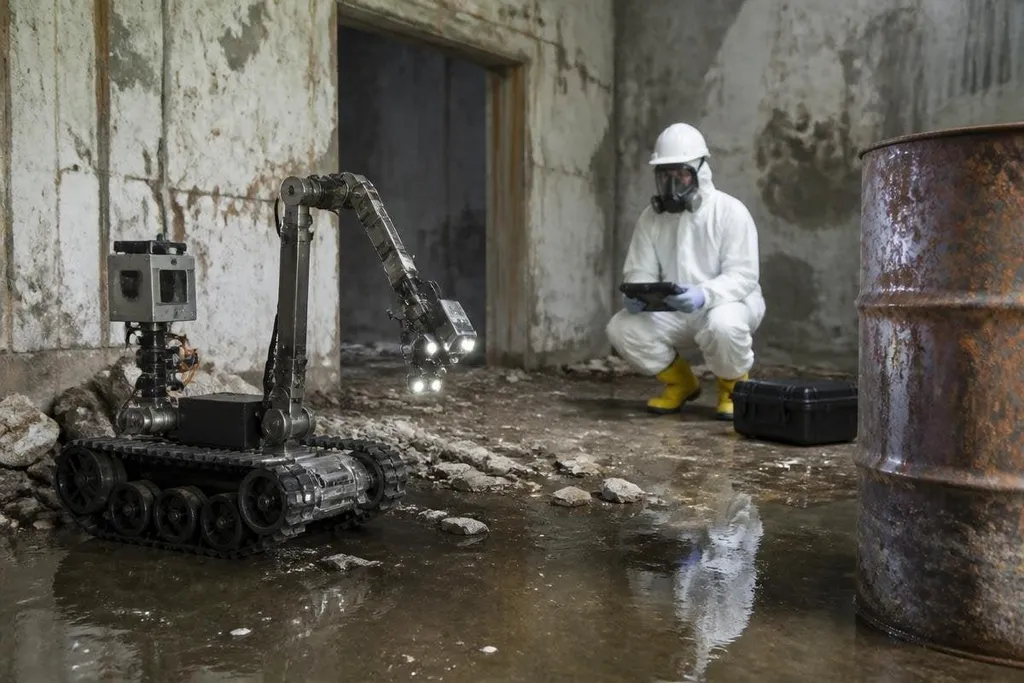
A radioactive site can contain damaged equipment, contaminated surfaces, standing water, and waste that people cannot safely handle for long periods. Robots reduce the time workers spend near those hazards by taking cameras, sensors, tools, and containers into the work area first.
- Remote machines inspect rooms before entry.
- Radiation sensors map unsafe areas and guide work plans.
- People still control the job, review data, and approve waste handling.
Inspection comes before removal
Cleanup starts with knowing where the radioactive material is and how much of it sits on each surface. The machine can carry cameras and radiation sensors through a room, record its position, and send the results to a control station outside the area.
That first pass can reveal blocked doors, damaged floors, loose debris, or water that may spread contamination. It also gives the team a map for later work, so the robot does not drive into an unknown space with a tool or waste container.
The machine may use tracked wheels, articulated arms, or a small crawler body. The right shape depends on the floor, the doorway width, the reach needed, and the mass of the material it must move. A system built for a smooth plant floor may fail on stairs or broken concrete.
Removing contaminated material
After inspection, a robot can perform tasks such as cutting pipe, lifting debris, scraping surfaces, or moving sealed containers. Its arm needs enough reach and torque for the task, while the base must stay stable when the tool meets resistance.
The tool also matters. A gripper can lift a bag or metal part, but a cutting tool may create dust or sharp fragments. That changes the cleanup plan. Teams may need a shielded enclosure, local air control, or a second robot to collect the waste.
Remote operation does not remove the need for judgment. An operator may control the arm by camera, send the robot along a planned route, or stop the machine when sensor readings change.
The control link must remain reliable, and the robot needs a safe recovery plan if it loses power or gets stuck.
Decontamination and waste handling
Some robots clean surfaces with brushes, water, vacuum tools, or other approved methods. The method depends on the material, the surface, and where the removed contamination will go. A cleaning pass that spreads material across a larger area creates more work.
Waste handling is often harder than the first inspection. The robot must place material in the correct container, keep the container closed, and move it through a route that has been checked. People then measure, label, store, and transport the waste under the site’s rules.
That handoff from robot to waste crew is where machine claims meet site rules. Anyone comparing machines, sensors, and remote systems can use radioactive cleanup robot reports to check the company, task, and test behind each claim. The practical test is direct: can the system collect usable data, carry the required load, and keep working after contamination reaches its outer surfaces?
Where robots still fail
Radiation can harm electronic parts, cameras, cables, and batteries. Protection may include shielding, replaceable parts, extra distance, or a design with fewer sensitive components near the work tool. These measures add mass and can reduce reach, speed, or operating time.
Communication can also break down inside thick concrete structures or steel-lined rooms. A robot may need a relay unit, a wired link, or a route planned around blocked signals. If the machine cannot send video or receive commands, the work stops until the team restores control.
The other limit is dexterity. A human can feel a stuck valve through a glove and change grip without stopping to study a screen. A remote arm has to infer that contact through force sensors, camera views, or motor readings. I’d choose a slower robot with a clear recovery plan over a faster one that leaves the team guessing after a jam.
A practical buying checklist
Before choosing a robot for radioactive cleanup, check these points:
- Radiation tolerance: Ask which parts have been tested, at what dose, and for how long.
- Tool fit: Match the arm, gripper, cutter, vacuum, or brush to the material and surface.
- Control link: Test video, command delay, backup communication, and loss-of-signal behavior.
- Recovery plan: Confirm how the team will tow, lift, power, or isolate the robot after a failure.
- Waste path: Plan the container, route, monitoring points, and final storage before removal starts.
- Worker role: Keep people responsible for decisions, measurements, approvals, and emergency actions.
The best system is the one that finishes a defined task without sending a person into the highest-risk area. Before deployment, the team should test the entire job, including survey, removal, and placement in the waste container, because a robot that can enter the room but cannot leave with the material has not finished the job.